
May 2025
Contents
- Blue Tulip Consultancy – Welcome
- Its ok for you, you are a white man!
- Case Law – Ngole v Touchstone Leeds – religious beliefs discrimination
- Good Stories
With our training and consultancy support the primary focus is on
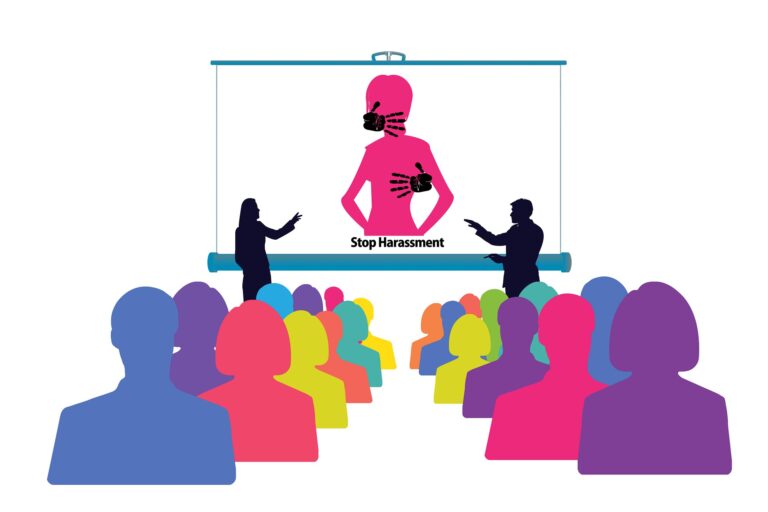
- Proactive and Preventative Actions to Sexual Harassment
- Understanding and controlling Microaggressions
- Organising and Managing Reciprocal Mentoring
- Finding Your Mojo – Professional Leadership Development Programme for Ethnic Minority Groups
- Inclusive Leadership Coaching – one-to-one or group coaching
A Note before you read further
I must confess I was nervous about writing an article focused on white men who often hold most leadership roles in organisations. I recognised that there was a perception of coming across as overindulgent towards this group of decision makers, given the ongoing concerns about inclusion in the workplace.
That said, I have written this article with care, sensitivity, and objectivity. If you read this and have a different perspective, I will genuinely welcome your reflections. It would be lovely to have a virtual coffee together.
Its ok for you, you are a white man!

Over the years, growing concerns have emerged about white men in leadership roles feeling excluded, even forgotten in the Diversity, Equity and Inclusion (DEI) arena at work. At the same time, there is a perception—sometimes a misperception—that white men lead easier professional lives, free from the burdens or angst of discrimination or bias. There are further assumptions that they wish to maintain the status quo and kudos of maintaining the power dynamic of being in the majority and therefore in control. There is a further stigma towards white men, that they simply don’t care.
Yet, despite their perceived privileged status and access to power, some white men feel that their voices are ignored, or that their concerns are dismissed as irrelevant, unimportant or even offensive.
I recently facilitated a series of mandatory Inclusive Leadership training programmes for a large organisation, with the majority of participants being white men in senior leadership roles. At the outset, some expressed visible scepticism, struggling to see the relevance or value of the training. Over time, many shifted to a more pragmatic stance, with comments like, “Just tell us what to say and do, and we’ll get on with it.” While this reflects a willingness to comply, it also revealed a preference for quick fixes over the anxiety of deeper engagement.
At times, I encountered stronger resistance, particularly when the discussion turned to the experiences of bullying, harassment, or exclusion within their own organisation. In these moments, it became clear that for some, the instinct was to discredit or deflect the message rather than confront its implications. On reflection, I believe this reaction may be rooted in fear. For some leaders, hearing these realities may trigger a deeper, unspoken question: If this has been happening on my watch, does that mean I’ve failed as a leader? Have I been getting it wrong all these years?
While much attention is rightly given to the burden of proof of competence and capability often placed on colleagues from minority backgrounds, there is comparatively little acknowledgement of the burden some white men carry in trying to “get it right.” It’s worth noting that some white men in leadership roles are genuinely committed to inclusion but often feel overwhelmed by the complexity of the topic. They face pressure to demonstrate competence and commitment of meaningful action while navigating the evolving and sometimes controversial discussions around equality and equity.
I recall one senior leader expressing, with visible anguish and metaphorical handwringing, the deep fear of being labelled racist or sexist. This fear can become paralysing and lead to counterproductive coping mechanisms.
One common response is avoidance—adopting a stance of “If I ignore difference, I can’t get it wrong,” which fosters complacency and disengagement. Another is overcompensation, where leaders may overlook poor performance or inappropriate behaviours from minority team members in an attempt to avoid being labelled as discriminatory. While often well-intentioned, this can lead to inconsistent standards, blurred boundaries, and a lack of accountability, ultimately undermining team cohesion and individual development.
A deeper and often overlooked conversation we need to have is to acknowledge and understand the internal experience of some white men in the context of DEI. Many feel that they cannot be fully authentic in expressing how they truly feel, their discomfort, their fear of saying the wrong thing, their anxiety about how they are perceived, and, how inclusion has, in some instances, led to their exclusion. These unspoken feelings can give rise to resentment or quiet resistance to DEI efforts, not out of malice, but from a place of disconnection and uncertainty.
It is therefore imperative to show empathy towards these men, recognising that they too may be grappling with their own challenges and a subtle sense of separation. Too often, they are met with blame, even anger, due to their apparent lack of understanding or because they are seen as part of the problem.
Taking this into consideration, it becomes somewhat understandable why some white men may find themselves colluding in groupthink, or even engaging in group bravado, where discriminatory jokes or banter become a means of maintaining a sense of belonging. In those moments of shared laughter, however inappropriate, there can be a fleeting sense of unity or camaraderie, a way of reinforcing tribal identity. Yet beneath this surface-level bonding, there often lies an undercurrent of discord.
Within these groups, there are men who quietly experience a sense of difference—perhaps because of their sexuality, being in a mixed-race relationship, or simply holding personal values that conflict with the attitudes of the dominant culture. As one colleague aptly put it, “Even as a white man, there is pressure to conform to the majority.” This internal dissonance is rarely acknowledged but is a powerful reminder that inclusion must also consider the hidden pressures within the majority itself.
In one instance, Jason, who had spent several years working abroad and engaging with different cultures, returned to the UK and deliberately chose to work in an organisation with diverse representation at all levels. He recognised that leading within a group characterised by sameness offered limited learning opportunities. He was aware that a need to be safe in an arena of sameness often made it easier to collude and avoid accountability. Jason wanted to learn by being challenged and held accountable in order to grow and be effective as a leader.
The reality is that, for some, DEI initiatives can feel as though they are designed for everyone except white men. There is a definite acknowledgement that marginalised groups have been historically excluded and underrepresented and these groups are more likely to continue to experience discrimination, microaggressions and barriers to career progression.
Yet there is value in cultivating a culture where senior leaders are not expected to have all the answers when it comes to DEI. Instead, they should be encouraged to model psychological safety by being open to trying new approaches, learning from experience, and continuously reflecting on how to do things differently and better.
Importantly, leaders should be able to acknowledge, without shame, that they will sometimes get it wrong. What matters most is how they respond in those moments, how they seek to repair, and how they support others through the process. It is about creating a culture rooted in kindness and accountability.
Senior Leaders do want to develop authentic relationships with people who are different to them, they just don’t know how to. It is about creating a safe space, of openness, honesty and trust. A space, where leaders can observe and understand the value and commitment of going on a personal and inclusion led growth journey that improves wider professional interactions. It’s about reshaping how we understand privilege—not as something you have, but as what you don’t have to face every day.
Essentially, it is about extending a genuine invitation to white men, welcoming them to the table, not to lead or provide answers but to be part of a valuable conversation of shared responsibility and collective progress.
Interesting Case Law
Ngole v Touchstone Leeds – Discrimination based Religious Beliefs

Case of Ngole v Touchstone Leeds, the Employment Tribunal had to consider whether a charity had discriminated against an applicant based on his religion and belief.
Background
Touchstone is a charity providing mental health services to a number of communities, including the LGBTQI+ community. Mr Ngole applied for the role of mental health support worker; he declared in his application that he was Christian. His application was initially successful, and an offer of employment was made, subject to references. Upon receipt of the references, Touchstone concluded they were not satisfactory; they then undertook an internet search against Mr Ngole’s name and found a number of articles reporting that Mr Ngole had previously been dismissed after posting derogatory comments on Facebook about gay and bisexual people. Consequently, Touchstone withdrew their job offer.
Mr Ngole challenged Touchstone’s decision. He was then invited to a second interview to discuss the issue. The purpose of the interview was to seek assurance from Mr Ngole that his views would not compromise his ability to undertake the role, and that he would embrace Touchstone’s values, including the promotion of LGBTQI+ rights. Touchstone did not receive the assurances they sought, and accordingly Touchstone did not reinstate the job offer.
The Tribunal Decision
Mr Ngole brought a number of claims in the Employment Tribunal, including direct discrimination and harassment. The tribunal were asked to consider the balance of Mr Ngole’s right to not be discriminated against because of his religion and belief, together with his right to freedom of expression, set against Touchstone’s concern about the impact on its service users.
The tribunal found that Touchstone’s objective of safeguarding vulnerable service users was sufficiently important to justify limiting Mr Ngole’s freedom of expression. However, withdrawing the job offer before the second interview went beyond what was necessary to protect service users and, accordingly, it did amount to direct discrimination. The tribunal found that Touchstone could have achieved its objective by having the second interview before withdrawing the offer. That said, Touchstone’s decision to not reinstate the job offer was not discriminatory, because Touchstone had not received the necessary assurances that Mr Ngole was suitable for the role.
The remainder of Mr Ngole’s claims failed.
Conclusion
Whilst this tribunal decision is not binding, it may provide some comfort to charities who are trying to balance the rights of applicants and staff against the rights of service users, particularly as the tribunal accepted Touchstone’s objective of protecting service users.
There are also some important lessons:
1. Remember that applicants for roles can bring claims of discrimination; and
2. If presented with similar challenging situations, charities need to carefully consider what their objectives are. They also need to consider whether their decisions are proportionate and, in particular, whether less intrusive steps could be taken in the first instance.
Source: Stone King August 2024
Good Stories
I am incredibly humbled to be nominated for the Entrepreneur Excellence Award at the National Diversity Awards 2025. Thank you all for your votes and your lovely words of acknowledgement – your messages brought tears to my eyes.
I also want to take a moment to acknowledge Mahmut Gunaydin, who was honoured with a BBC Make a Difference Award 2025 for his inspiring work in promoting equality, diversity, and inclusion in schools.
His Life of a Chickpea project follows a chickpea’s journey as a metaphor for British values of democracy, individual liberty and mutual respect.
The ideology is about taking a single ingredient from the dessert on a journey of becoming part of a wider dish, and asking critical questions along the way, school students are asked to evaluate how they see themselves in relation to their wider society.
About Blue Tulip
Blue Tulip Consultancy supports organisations to develop, lead and execute Diversity and Inclusion strategic objectives. The process involves working with senior leadership teams to establish and implement measurable D&I objectives and goals. We also include an analysis of the current trends, identify key areas of opportunity with creative, compelling recommendations to effect change. Blue Tulip Consultancy provides guidance on how to implement the recommendations into practice.
If you would like more details about how we can help your organisation please have a look at our website or if you would like a short chat over the phone please email hello@bluetulipconsultancy.com to arrange a convenient time.
Snéha Khilay
Managing Director
Blue Tulip Consultancy
hello@bluetulipconsultancy.com
www.bluetulipconsultancy.com
Inspired by the famous Gandhi quote, “be the change you want to see in the world”